

In today’s competitive real estate market, pre-approvals are more crucial than ever. Before you start the home buying process, it’s essential to understand the basics of the mortgage pre-approval process and how it may help you purchase your dream home.
What Does Being Pre-approved for a Mortgage Mean?
Being preapproved for a mortgage means a mortgage company has reviewed information about your finances and estimated how much you may be able to borrow.
The review may consider your:
- Income and employment
- Assets and available funds
- Existing debts
- Credit history
- Planned down payment
- Other financial obligations
If you meet the applicable requirements, the mortgage company may issue a written pre-approval letter stating the approximate loan amount for which you may qualify, subject to certain conditions.
A pre-approval can help you understand your purchasing power, establish a realistic homebuying budget, and focus your property search. It may also show sellers and real estate professionals that you have taken meaningful steps toward obtaining financing.
The amount shown in a pre-approval letter is not necessarily the amount you should choose to spend. Your personal budget should also account for monthly expenses, savings goals, home maintenance, and other financial priorities.
How Long Is a Mortgage Pre-Approval Valid?
Most mortgage pre-approval letters are valid for approximately 30 to 90 days. However, the exact time frame can vary based on the mortgage company, loan program, and borrower circumstances.
Your pre-approval letter should include an expiration date or explain how long it remains valid. If the expiration period is unclear, ask your mortgage specialist before you begin making offers.
A current letter is important because sellers and real estate professionals may want to confirm that your financial information has been reviewed recently. An expired letter may no longer accurately reflect your income, assets, debts, credit, or potential eligibility.
The expiration date indicates how long the letter is intended to remain current. However, a significant financial change may require the mortgage company to reevaluate your pre-approval before that date.
Why Do Mortgage Pre-Approvals Expire?
A pre-approval has a time frame because the mortgage company bases it on your most recent financial information.
Your circumstances may change during your home search. You could change jobs, experience a change in income, open a new credit account, take on additional debt, make a large purchase, or use a significant portion of your savings.
Financial documents also become outdated. A mortgage company may need current pay stubs, bank statements, employment information, and credit details to determine whether the original pre-approval amount is still appropriate.
A pre-approval may also need to be reevaluated before its stated expiration date if there is a meaningful change to your employment, income, credit, debts, or available assets. Speak with your mortgage specialist before making significant financial changes during the homebuying process.
What Happens if my Pre-Approval Expires While I am Searching for a Home?
If your mortgage pre-approval expires while you are still searching for a home, contact your mortgage specialist and request an updated review.
You may need to provide recent versions of documents such as:
- Pay stubs
- Bank or investment statements
- Employment information
- Information about your current debts
- Documentation for other income or assets
- The mortgage company may also need to review updated credit information.
An expired pre-approval does not necessarily mean that you must restart the entire process. If your financial profile has remained stable, renewing the letter may primarily involve updating information that is no longer current.
However, the approximate loan amount may change if your income, assets, debts, credit, or other circumstances have changed since the original letter was issued.
Can You Extend or Renew a Mortgage Pre-Approval?
A mortgage pre-approval is not usually extended automatically past its expiration date. Instead, the mortgage company may renew or update it after reviewing your current financial information.
If your letter is approaching its expiration date and you are still actively searching for a home, contact your mortgage specialist in advance. This gives you time to submit any required documents and obtain an updated letter before making an offer.
The amount of information required may depend on how much time has passed and whether your financial circumstances have changed.
Does Pre-Approval Guarantee a Mortgage?
No. Mortgage pre-approval does not guarantee a home loan or final mortgage approval.
A pre-approval is based on an initial review of your financial profile. Final approval usually requires a more complete review of the borrower, property, loan program, and transaction.
Before issuing final approval, the mortgage company may still need to verify:
- Your current income and employment
- Your assets and funds for closing
- Your debts and credit profile
- The value and condition of the property
- The property’s eligibility for the selected loan program
- The purchase agreement and transaction terms
- Any remaining underwriting conditions
The property you select can also affect financing. Its purchase price, appraised value, condition, property type, down payment, and selected loan program may influence whether the transaction qualifies for final approval.
For these reasons, a pre-approval should be viewed as an important step in the mortgage process, not a guarantee that the loan will close.
What’s the Difference Between a Mortgage Pre-Approval and Pre-Qualification?
A pre-approval is a more in-depth review of your credit profile, issued after an underwriter reviews your documents. A pre-qualification is a simple, non-binding letter drawn up by a mortgage specialist that provides an estimated or approximate loan amount. A pre-qualification is not an official commitment, whereas a pre-approval is.
| Pre-qualification | Pre-Approval | |
| Purpose | Provides an early estimate of how much you may be able to borrow | Provides a more detailed assessment of how much you may be able to borrow |
| Information reviewed | Typically based on preliminary financial information | Commonly includes financial documents and a credit review |
| Level of review | Generally less detailed | Generally more comprehensive |
| Use during a home search | Helpful for early planning and budgeting | May help show sellers that you have taken more substantial steps toward financing |
| Loan guarantee | Does not guarantee financing | Does not guarantee final mortgage approval |
At GuardHill, a mortgage specialist can explain which process is appropriate for your situation and what information you may need to provide.
Estimate Your Purchasing Power
Not ready for a formal pre-approval? GuardHill’s pre-qualification calculator can provide an initial estimate of your potential loan amount and purchase price using basic income, debt, tax, insurance, loan term, and interest rate information.
The results can provide a useful starting point as you plan your home search. However, the calculator provides an estimate and does not represent a mortgage pre-approval, loan commitment, or guarantee of financing.
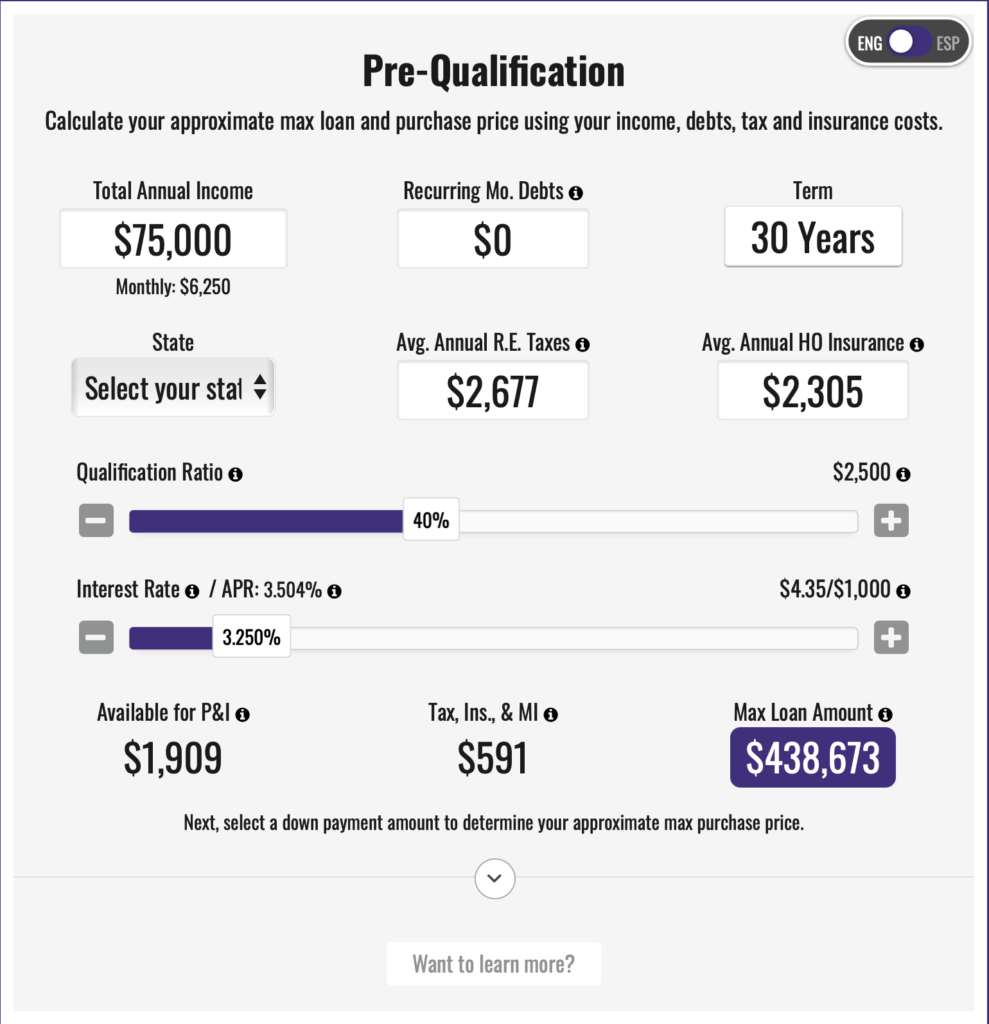
After using the calculator, speak with a GuardHill mortgage specialist for a more detailed review of your financial profile and potential mortgage options.
How Do You Get Pre-approved for a Mortgage?
The first step in getting preapproved is typically submitting a mortgage application and the requested financial documentation.
Commonly requested information may include:
- Income and employment records
- Bank and investment statements
- Identification
- Information about existing debts
- Tax returns or other income documentation, when applicable
The mortgage company may also review your credit history to understand how you have managed past debts and monthly obligations.
Providing complete and accurate information can help prevent delays. GuardHill may be able to provide same day pre-approvals in certain circumstances, depending on how quickly the requested information is submitted and whether additional review is required.
For a more detailed list of commonly requested documents, review GuardHill’s mortgage documentation checklist.
When Should You Get Preapproved for a Mortgage?
Consider getting preapproved when you are financially prepared to purchase a home and expect to begin actively searching for a property.
Because mortgage pre-approvals commonly expire within 30 to 90 days, getting one too early may mean that you need to renew it before making an offer. Ideally, your pre-approval should remain current while you are viewing homes and preparing to submit offers.
Getting preapproved before making an offer may help you:
- Understand your approximate financing range
- Establish a more focused homebuying budget
- Identify documentation or credit concerns earlier
- Show sellers that you have begun the financing process
- Move more efficiently when you find a suitable property
You may want to speak with a mortgage specialist earlier if you need time to organize documentation, improve your credit profile, save additional funds, or evaluate different mortgage options.
Get Pre-approved With GuardHill
GuardHill mortgage specialists can review your financial profile, explain your potential loan options, and help you understand how long your pre-approval letter will remain valid.
Ready to begin your home search or renew an expiring pre-approval? Contact a GuardHill mortgage specialist to discuss your purchasing power, documentation, and next steps.
Frequently Asked Questions About Mortgage Pre-Approval
How Long Does it take to get Pre-Approved for a Mortgage?
GuardHill can offer same-day pre-approvals. However, the timeline may depend on how long it takes you to gather and submit your documents for review. The faster you can provide all the necessary information, the faster the mortgage company can review your credit profile!
How Long is a Mortgage Pre-Approval Good for?
Mortgage pre-approvals are typically good for about 30-90 days. Expiration dates may vary by lender, and it is essential to inquire about the expiration date upon receiving a pre-approval.
How Do I Get Pre-Approved?
The first step is submitting a mortgage application. From there, you will provide documentation for a mortgage specialist to review.
After receiving the proper documentation, the mortgage company will check your credit to understand how well you have handled past debt.
For more information, review GuardHill’s mortgage documentation checklist.
How Much Can I Get Pre-Approved For?
The amount you may be pre-approved for depends on your current income and debts. GuardHill’s interactive pre-qualification calculator can help you estimate an approximate loan amount and how much house you may be able to afford.
Why are Pre-Approvals Important?
A mortgage pre-approval makes you a more competitive buyer, which is becoming increasingly important in today’s real estate market filled with bidding wars. Getting pre-approved shows the real estate agent and seller that you are a serious buyer and may have a better opportunity to secure financing for the home than other buyers.